Introduction
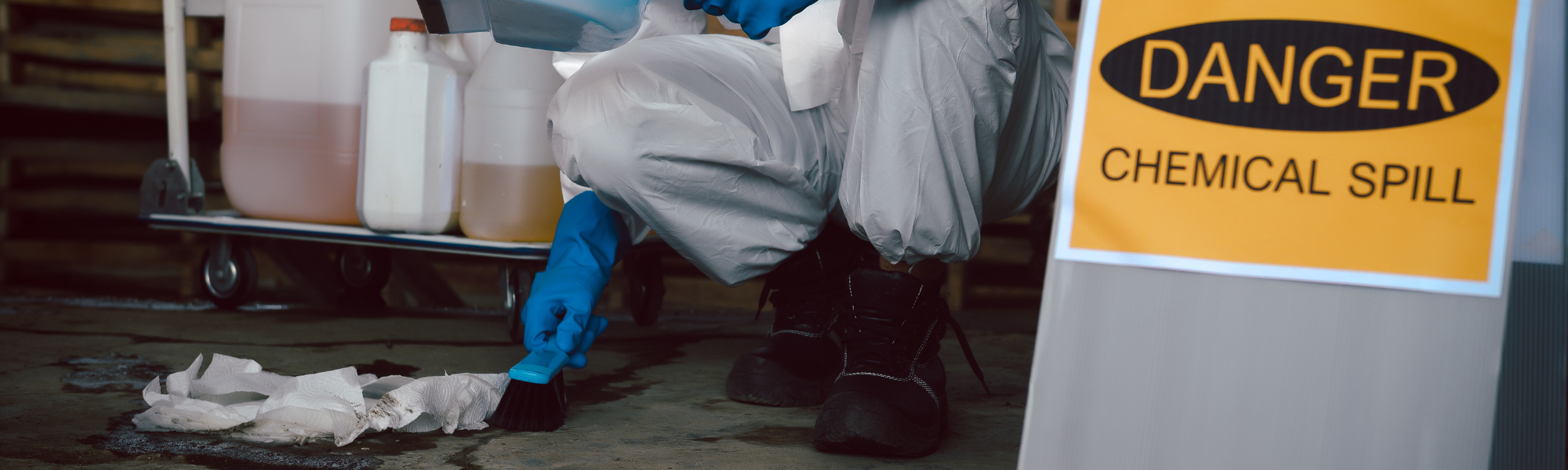
Industrial spills remain a constant operational challenge across manufacturing plants, automotive shops, warehouses, distribution centers, and municipal facilities. Whether it’s oil, coolant, chemicals, or hydraulic fluid, quick and effective spill management is essential. Choosing the right absorbent impacts everything—from worker safety and OSHA compliance to cleanup time and long-term cost savings.
In this article, we break down the weaknesses of traditional clay absorbents, the advantages of modern mineral absorbents like QuiKleen, and best practices for facilities handling spills daily.
The Problem With Traditional Clay Absorbents
Clay absorbents have been used for decades mainly because they are inexpensive and widely available, but their limitations are significant and well-documented:
- Slow absorption time, delaying cleanup
- Heavy and messy to handle, increasing worker fatigue
- Contains crystalline silica, a known carcinogen
- Produces harmful dust and residue
- Requires large quantities, increasing disposal volume and waste
These drawbacks reduce efficiency, increase labor hours, and expose workers to unnecessary respiratory hazards—making clay a risky choice for modern operations.
Why Mineral Absorbents Are Superior
Modern mineral absorbents such as QuiKleen provide a safer, cleaner, and more effective alternative:
- Non-toxic and silica-free
- Absorbs 3–5x more efficiently than clay
- Lightweight and easy to apply
- Leaves zero harmful dust
- Significantly reduces disposal volume
- Safe for commercial, industrial, and municipal environments
The engineered mineral structure absorbs liquids on contact, trapping fluids instantly and simplifying cleanup.
Industries That Benefit Most
A wide range of industries gain immediate efficiency and safety improvements from switching to mineral absorbents:
- Auto repair and service shops
- Manufacturing plants
- Heavy equipment service centers
- Schools and universities
- Municipal facilities and emergency services
- Hospitals, clinics, and government buildings
Any location that handles machinery, chemicals, fuel, or foot traffic can benefit from cleaner and safer absorbent products.
Practical Applications
Mineral absorbents like QuiKleen excel in the following real-world scenarios:
- Oil and hydraulic leaks around heavy machinery
- Chemical drips during maintenance operations
- Coolant and antifreeze spills in automotive shops
- Fuel spills in fleet and transportation areas
- Water-based spills in public and commercial facilities
They provide fast absorption, making cleanup simpler and less time-consuming.
Environmental and OSHA Benefits
Using non-toxic mineral absorbents helps organizations improve safety and remain compliant with industry regulations:
- Reduces airborne silica exposure
- Supports OSHA respiratory and spill-response requirements
- Lowers hazardous waste disposal volume
- Contributes to facility sustainability goals
Mineral absorbents deliver both compliance advantages and measurable cost savings over time.
Final Recommendation
Switching from clay to mineral absorbents is one of the easiest, most cost-effective upgrades any facility can make. QuiKleen delivers superior absorption, cleaner results, and safer performance—helping businesses reduce risk, save time, and maintain OSHA compliance.
For modern industrial spill management, QuiKleen is the clear choice.